


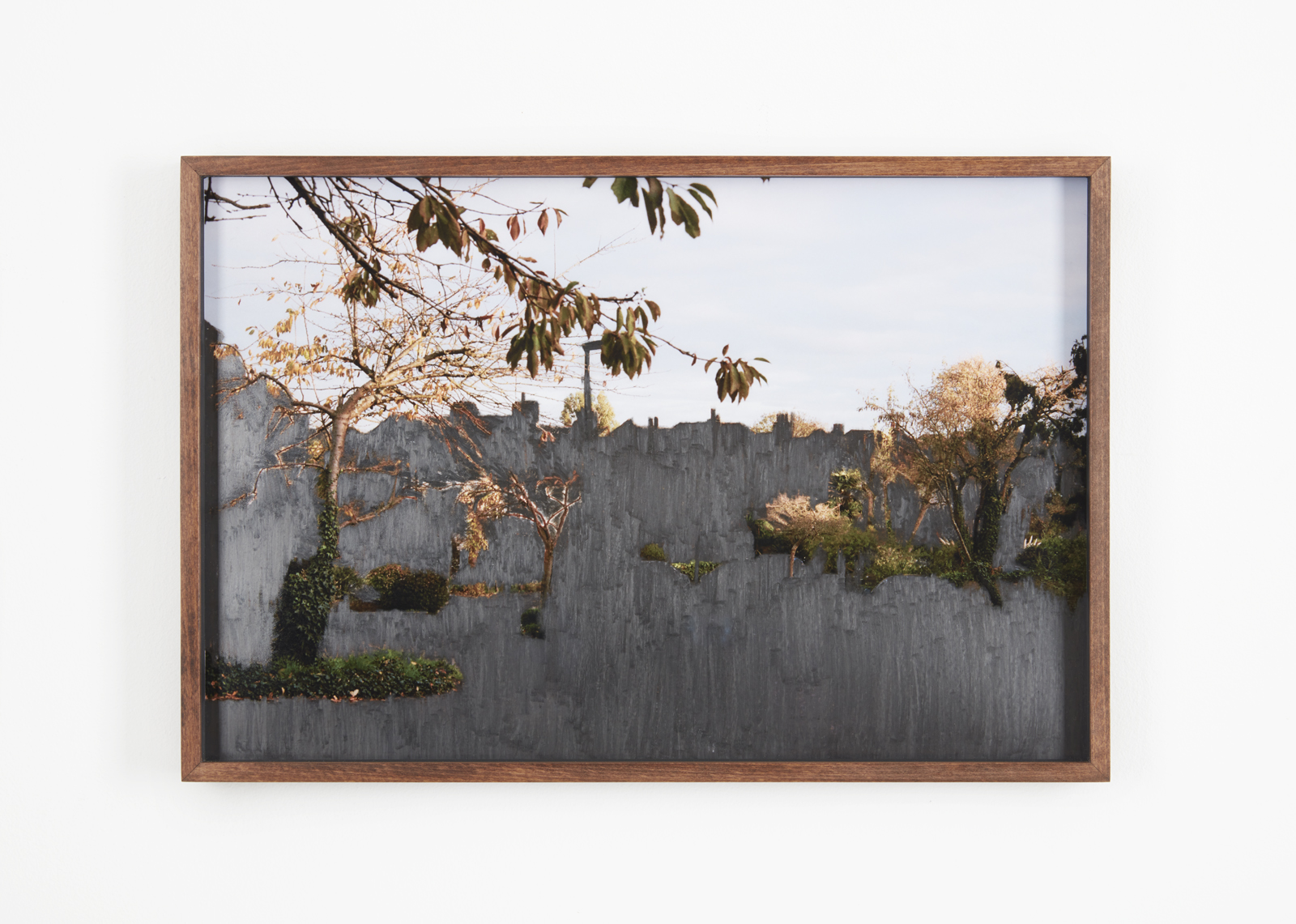


This series started just before the first Lockdown but became particularly poignant at a time of ‘Stay At Home’ when the desire in the city to reconnect with nature became an emotional escape.
Local areas and familiar street scenes are first photographed and then re-imagined through obscuring layers of graphite, built-up on the surface of the photographic prints, leaving all that is human-made concealed. An echo of a bygone natural identity or possible future identity is hinted at and expressed.


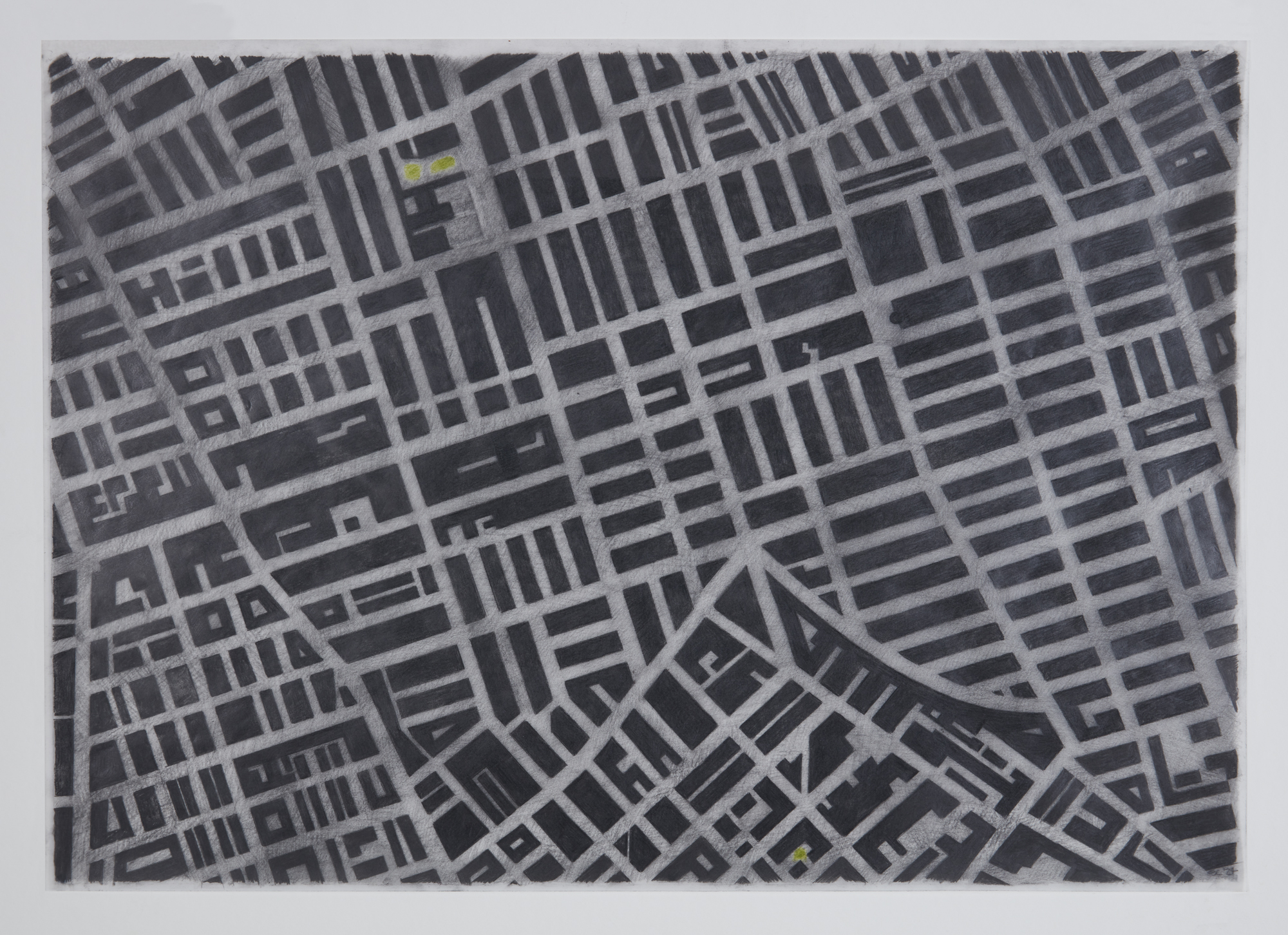


HULME HABITATS
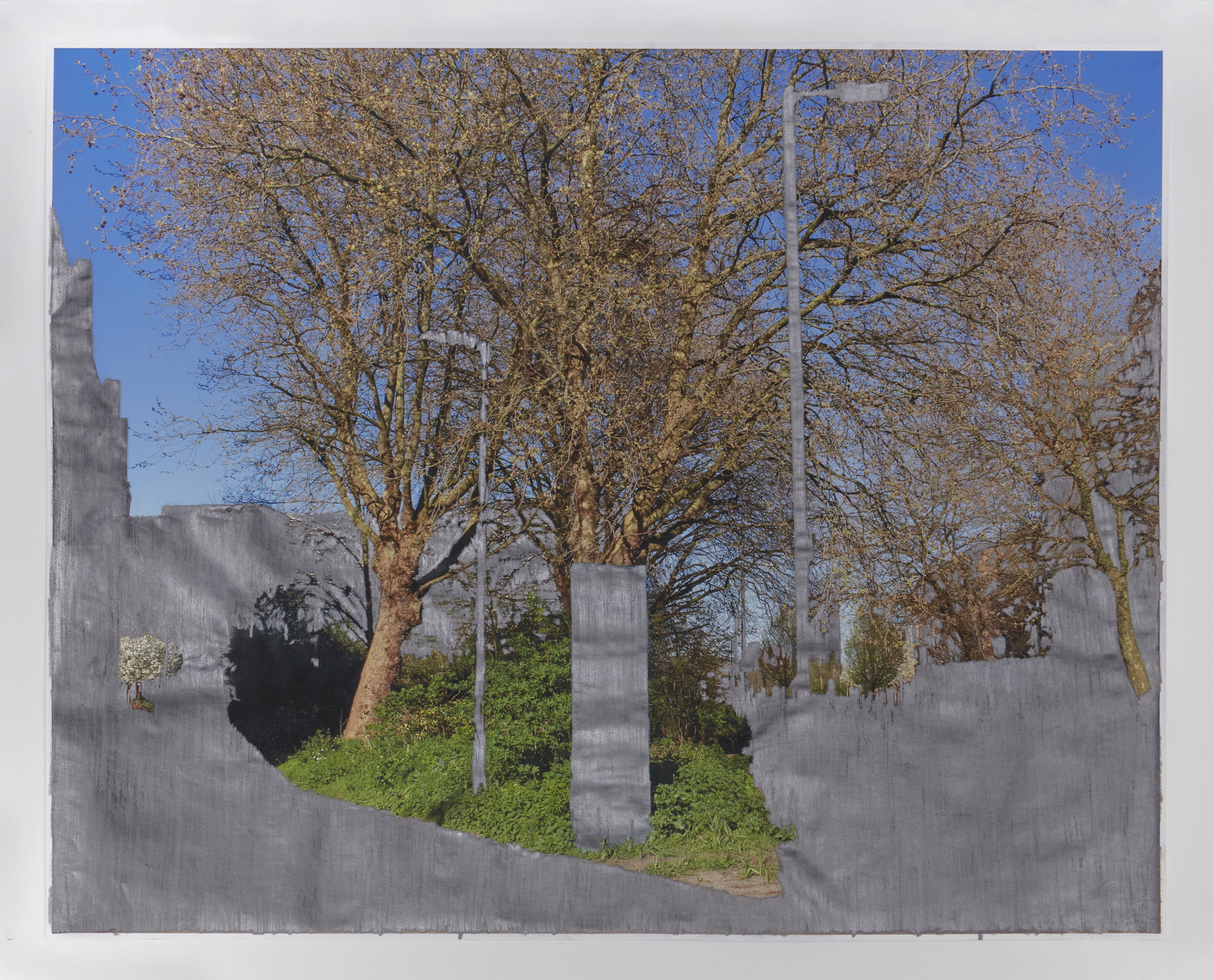
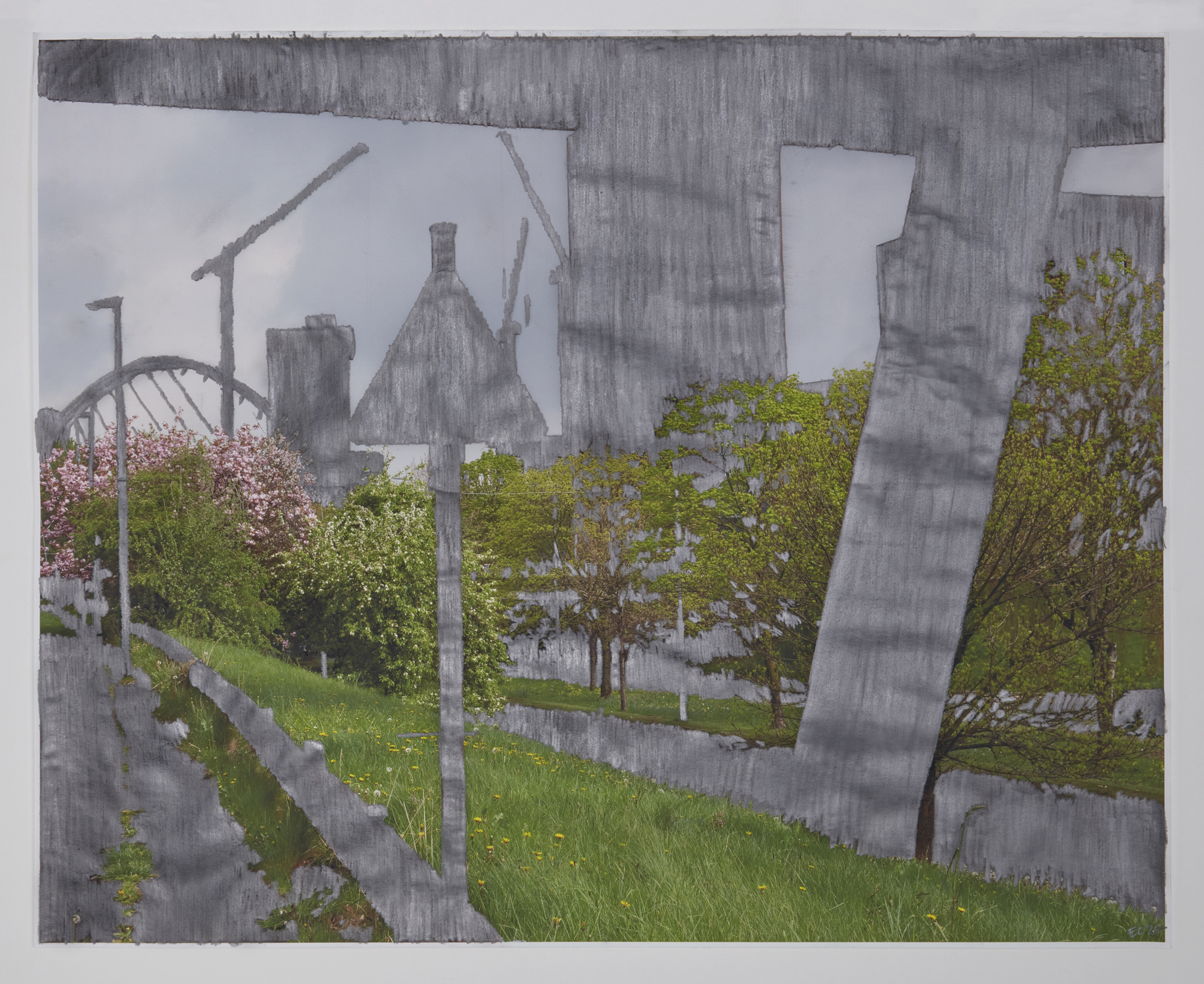
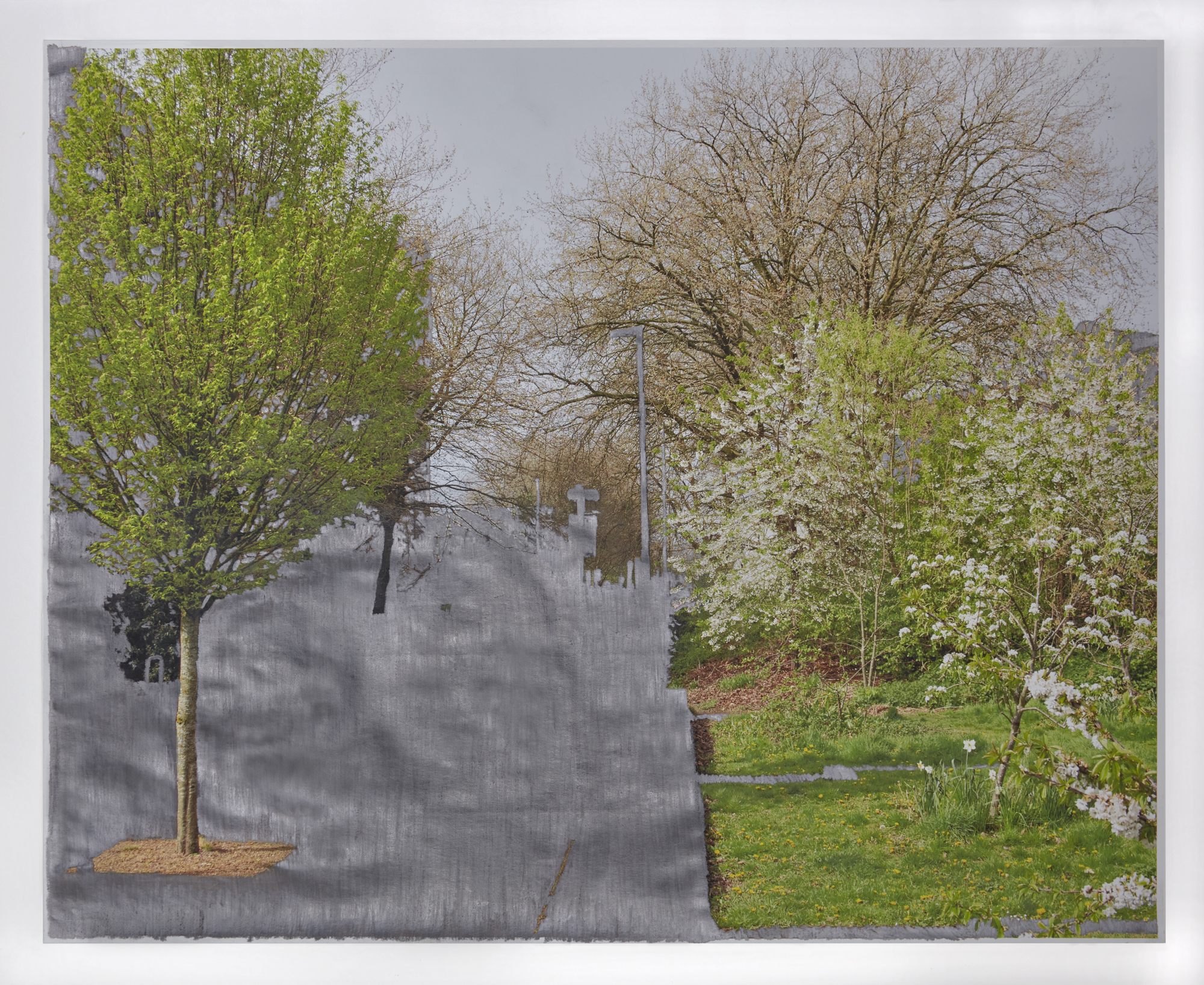
The work in this series follows on from the ALTER series of drawings which combines drawing with photography. These works focus on the inner city area of Hulme in Manchester and the significance of it’s green spaces.
This series was exhibited by: The Modernist, 4th July — 31st August 2024:
Hulme has become a byword for bold, sweeping architectural transformations, first seen in the modernist era’s extensive redevelopment of the Victorian ‘slums’ and then again in the 1990s. In this exhibition, Emma Coop meticulously redrafts maps by hand to decipher the complex history, with a particular emphasis on envisioning urban landscapes devoid of buildings, focusing instead on the verdant urban spaces.
The dramatic modernist overhaul of Hulme, followed by its notorious decline, is a story familiar to many in Manchester and beyond. Once home to one of Europe’s most expansive housing projects, marked by its ‘streets in the sky’ and the emblematic Crescents, it stood for just over twenty years. Yet, Emma Coop chooses not to dwell on the architectural shortcomings or the surge in crime. Instead, she explores an often-ignored aspect of Hulme’s identity: its public green spaces. She investigates whether a legacy of modernism continues to flourish, at least in part, within Hulme’s green enclaves.
The transformation of Hulme begins with the industrial revolution whereby concentrated poor quality housing was built at rapid pace to house the workers of Manchester’s factories. The 1945 City of Manchester Plan was created to address the city’s problems: ‘the meanness and squalor of Hulme’ and ‘the drab streets… the sulphurous and sunless atmosphere’.
Hulme, at that time, was characterised by hard surfaces, and very little in the way of green space or trees. With the City’s air thick with pollution from the factories, trees struggled to grow. This hard urban environment barren of nature is characterised in the paintings of Lowry.
The masterplan designed by the City Architect’s department and Wilson and Womersley set out to create a futuristic vision in complete contrast: ‘large-scale building groups and open spaces, and, above all, by skilful landscaping and extensive tree planting, it is our endeavour to achieve, at Hulme, a solution to the problems of twentieth-century living’.
‘Post demolition now the new re-built Hulme offers another vision, one which I haven’t had the benefit of slowly adapting to, I’m keen to learn how a sense of ‘place’ even ‘home’ survives beyond buildings and if the modernist utopian vision is still present nestling in the green spaces it established in Hulme.
I discovered there is something of the topology of the land, the quality of the light at certain times of the days; the angling of shadows, the familiar rustle of leaves at specific points that, whilst I don’t relate to or know a single hard surface, manages to rekindle a familiarity.
The remaining trees are anchor points for plotting my location within an alien architectural landscape. They have grown bigger now: the extra height, rings of growth and their gnarly expanding trunks acknowledge the passing of time. They reign majestically over the new slickly clad buildings —knowingly.
Living in an era with an increasing awareness of the effects of climate change and with the looming deadline for net zero emissions by 2050 it feels particularly pertinent to reflect on a previous era’s planning heritage which relied so heavily on creating greenspace.’ Emma Coop
OUT OF MY BODY & OUT OF MIY MIND Photography by Tim Bowditch. HULME HABITATS Photography by Lenka Rayn H.
Please note:This website and all of its content are the copyright of EMMA COOP and/or various third parties. the content is for your personal and non commercial use only. You may not dowload content for commercial purposes without prior written permission from the artist.
 E M M A COOP